
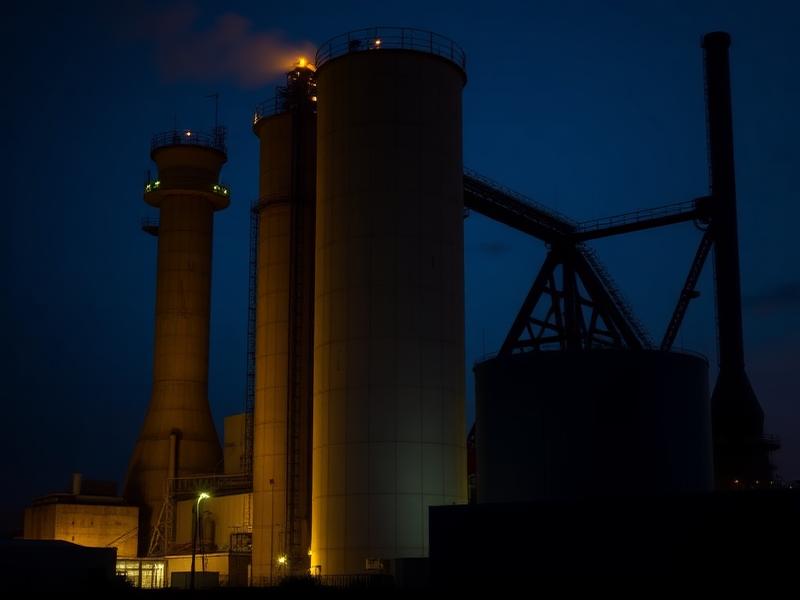
≈1,450 °C
Cement industry refractory solutions
Rotary-kiln linings for burning, transition and cooling zones under alkali, sulphur and clinker abrasion.
- Operating temperature
- ≈1,450 °C (material), 1,900 °C flame
- Target lining life
- 8–14 months burning zone
- Main driver
- Alkali / sulphur cycle, coating stability
- Mechanical load
- Shell ovality and rotation
Kiln characteristics
Rotary cement kilns burn clinker at around 1,450 °C while the shell rotates and flexes continuously. Alternative fuels — RDF, tyres, sludge — have raised alkali, chlorine and sulphur loads and made the burning-zone atmosphere far more variable than it was twenty years ago. The lining must tolerate coating that forms and falls, ovality-driven mechanical stress and frequent kiln stops.
Main challenges
Alkali and sulphur attack
Volatile K₂O, Na₂O, SO₃ and Cl condense inside the brick pores, expand and cause alkali bursting and structural spalling.
Clinker abrasion
Nodulised clinker grinds the lining in the transition and cooling zones where no protective coating forms.
Thermal shock
Coating fall and unplanned kiln stops swing the hot face by hundreds of degrees within minutes.
Ring and build-up formation
Sulphur-rich rings restrict material flow and tear away lining when they are blasted off.
Mechanical stress
Shell ovality, tyre migration and poor brick installation generate torsional load and brick loosening.
Our engineering approach
- 01
Coating-friendly burning-zone brick
Magnesia-spinel and magnesia-hercynite grades are chosen for their ability to hold stable coating, which is the cheapest refractory of all.
- 02
Chrome-free where the process allows
Magnesia-alumina spinel avoids Cr(VI) formation and the disposal cost that comes with spent magnesia-chrome linings.
- 03
Alkali-resistant preheater and inlet
Andalusite and alkali-resistant castables in the riser and inlet cut build-up and resist salt penetration.
- 04
Installation and anchoring discipline
Correct brick ring closure, shim practice and anchor layout in the cooler are supplied as part of the lining package.
Recommended products by zone
| Zone | Recommended material | Why it works |
|---|---|---|
| Burning / firing zone | Magnesia-alumina spinel bricks, magnesia-hercynite bricks, magnesia-chrome bricks | Coating adhesion plus resistance to clinker liquid phase and thermal cycling. |
| Transition zone | Silicon mullite red bricks, magnesia-alumina spinel bricks | High hot strength and abrasion resistance where coating is unstable. |
| Cooling zone & kiln hood | High-strength high-alumina bricks, corundum and wear-resistant castables | Abrasion and thermal-shock resistance under falling clinker. |
| Preheater, riser and inlet | Alkali-resistant castables, andalusite bricks, insulating backup | Blocks alkali salt penetration and reduces build-up cleaning frequency. |
Other industries
1,500–1,600 °C
Glass industry
Melting-end linings engineered for 8–15 year campaigns without glass contamination.
up to 1,700 °C+
Metallurgical industry
Blast furnace, converter, EAF, ladle and tundish linings for steel and ferroalloy plants.
900–1,600 °C
Electric power industry
Boiler, CFB and biomass linings engineered against fly-ash erosion and sulphur corrosion.
1,100–1,300 °C
Lime (calcium) industry
Rotary and shaft lime kiln linings for calcination, transition and preheating zones.
850–1,200 °C
Waste incineration industry
Municipal and hazardous waste incinerator linings for the most aggressive chemistry in the industry.