
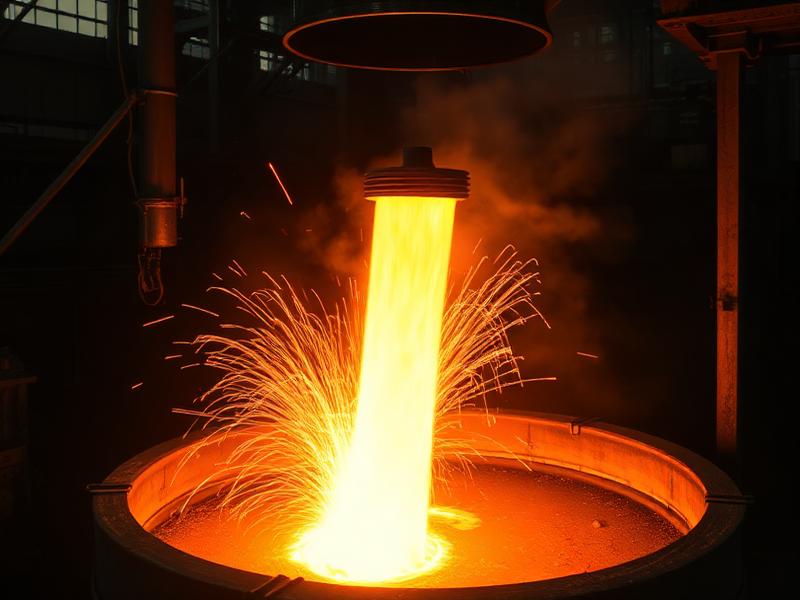
up to 1,700 °C+
Metallurgical industry refractory solutions
Blast furnace, converter, EAF, ladle and tundish linings for steel and ferroalloy plants.
- Operating temperature
- 1,550–1,700 °C+
- Key units
- BF, BOF, EAF, ladle, RH, tundish
- Main driver
- Slag chemistry and basicity
- Cost metric
- kg refractory / tonne steel
Typical applications
Blast furnace, hot blast stove, electric arc furnace, converter, ladle, RH degasser, tundish and ferroalloy furnace. Operating temperatures exceed 1,700 °C and the lining is attacked simultaneously by molten steel, aggressive slag chemistry, gas flow and mechanical impact from scrap charging and tapping. Refractory consumption per tonne of steel is a directly tracked cost, so campaign life and safe wear indication drive every specification.
Main challenges
Molten steel erosion
Flow at tap holes, impact pads and slide gates erodes the lining mechanically as well as chemically.
Slag corrosion
Basicity, FeO and MnO content dictate wear; a mismatch between slag and lining chemistry can halve campaign life.
Carbon oxidation
MgO-C bricks lose their carbon bond to oxygen and to FeO in slag, leaving a weakened decarburised layer.
Thermal cycling
Ladles and tundishes cycle between ambient and 1,600 °C on every heat, driving crack growth and spalling.
Mechanical impact
Scrap charging, deskulling and lance movement break the hot face independently of chemical wear.
Our engineering approach
- 01
Slag-matched chemistry
We select basic, neutral or alumina-based linings from your actual slag analysis rather than a generic recommendation.
- 02
Antioxidant-protected carbon bonds
Metallic antioxidants in MgO-C and Al-Mg-C grades slow decarburisation and extend converter and ladle campaigns.
- 03
Zoned wear balancing
Slag line, barrel and bottom grades are balanced so all zones reach end of life together — no premature relines.
- 04
Monolithic where downtime dominates
Self-flowing and gunning castables cut relining time in tundishes, runners and ladle bottoms.
Recommended products by zone
| Zone | Recommended material | Why it works |
|---|---|---|
| Blast furnace & hot blast stove | High-alumina bricks, carbon bricks, silicon carbide bricks | Thermal conductivity and alkali/CO resistance for very long campaigns. |
| Converter & electric arc furnace | Magnesia-carbon bricks, magnesia-chrome bricks | Basic chemistry and carbon bonding resist high-FeO slag at the hot spots. |
| Ladle & RH degasser | Al-Mg-C bricks, corundum-spinel castables, magnesia-alumina castables | Slag-line corrosion resistance combined with thermal-shock tolerance across heats. |
| Tundish & runners | Tundish dry vibratable coatings, self-flowing corundum castables | Fast turnaround, clean steel and easy deskulling. |
Other industries
1,500–1,600 °C
Glass industry
Melting-end linings engineered for 8–15 year campaigns without glass contamination.
≈1,450 °C
Cement industry
Rotary-kiln linings for burning, transition and cooling zones under alkali, sulphur and clinker abrasion.
900–1,600 °C
Electric power industry
Boiler, CFB and biomass linings engineered against fly-ash erosion and sulphur corrosion.
1,100–1,300 °C
Lime (calcium) industry
Rotary and shaft lime kiln linings for calcination, transition and preheating zones.
850–1,200 °C
Waste incineration industry
Municipal and hazardous waste incinerator linings for the most aggressive chemistry in the industry.